10 Everyday Indian Cooking Mistakes You Never Knew You Were Making
Small habits. Big impact. The invisible mistakes quietly changing how your food tastes, feels, and affects your health.
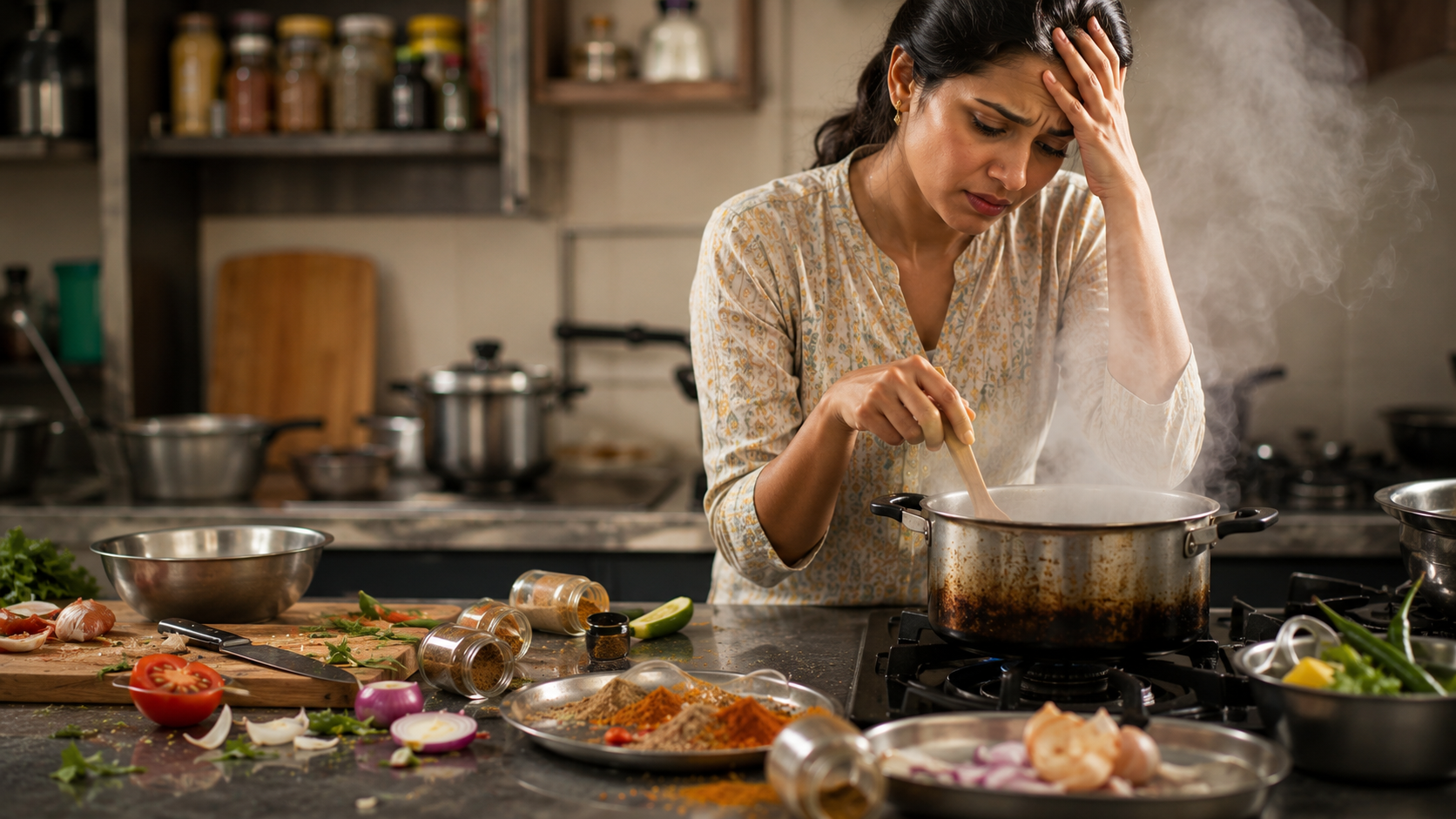
In every Indian home, the kitchen has a personality of its own. Some kitchens are calm, where spices are measured, onions brown patiently, and dal simmers like it has nowhere else to be. Others? Pure chaos. Pressure cooker whistles, half-cut vegetables, someone shouting “bas ho gaya!” while the food clearly disagrees.
And somewhere in this everyday rhythm, small mistakes quietly slip in. Not dramatic. Not obvious. But powerful enough to change how food tastes… feels… and even how it affects your health.
Picture this: It is a Sunday afternoon. The pressure cooker is whistling from the kitchen. A familiar aroma of jeera and haldi drifts into the living room. Your dal is on. You are confident, this is not your first time. And yet, when you finally sit down to eat, something feels off. The dal is either too thin, the sabzi is mushy, or the masala tastes bitter. You cannot quite put your finger on it.
You are not alone. Across millions of Indian homes, the same invisible mistakes are repeated every single day. Not out of carelessness, but because nobody ever said they were mistakes in the first place.
Today, we fix that.
The “Everything in One Pan” Habit
In Indian homes, cooking often competes with everything else — calls, chores, conversations. So what happens? Everything goes into the pan together.
Onions. Tomatoes. Masala. Vegetables. Maybe even water. Feels efficient. But food doesn’t work like that.
- No proper sautéing
- Uneven cooking
- Flavours don’t build, they clash
- Onions first
- Then spices
- Then vegetables
The Masala Overload Myth
A very Indian belief: “Thoda aur masala daal dete hain.” But spices are not volume knobs. Too much, and everything tastes the same — just louder.
- Heat overpowers flavour
- Balance disappears
- Dish becomes tiring to eat
- Haldi = Base
- Mirchi = Heat
- Garam Masala = Finishing Touch
Burning the Tadka
That moment when oil is too hot, mustard seeds turn dark instantly, garlic goes from golden to bitter in seconds… and you still continue cooking. We’ve all done it.
- Bitterness spreads across the dish
- No fixing it later
- Medium flame always
- Add spices when oil is hot, not smoking
- Stay present while preparing tadka
Not Cooking Onions Properly
“Golden brown” is one of the most misunderstood instructions. Most people stop too early.
- Raw, sharp taste in gravies
- Masala never develops depth
- Cook on medium flame
- Add a pinch of salt
- Wait until onions are deep golden and slightly sweet
Adding Tomatoes Too Early
A very common sequence mistake:
Onions → Masala → Immediately Tomatoes
Tomatoes stop the spices from cooking properly. Result: A raw, powdery taste that never blends.
- Spices remain undercooked
- Raw and powdery flavour
- Masala never fully develops
- Let spices cook for 1–2 minutes
- Wait till oil slightly separates
- Then add tomatoes
Too Much Water in Everything
If something looks thick → add water. If something sticks → add water. If confused → add water. Sound familiar?
- Curries become watery
- Flavour weakens
- Texture feels incomplete
- Add water gradually
- Let ingredients release their own moisture
- Adjust consistency at the end
Overcooking Vegetables
In many Indian kitchens, vegetables are cooked until they lose identity.
- Nutrients reduce
- Colour fades
- Texture becomes lifeless
- Cook until just tender
- Keep some bite
- Avoid over-boiling
Overcrowding the Pan
Trying to cook everything at once seems efficient. But overcrowding leads to steaming, not roasting.
- No browning
- Mushy texture
- No depth in flavour
- Cook in batches
- Give ingredients space
- Let them sit undisturbed for a few minutes
Not Tasting While Cooking
Many home cooks taste only at the end. By then, it’s too late.
- Salt imbalance
- Flavour mismatch
- No chance to adjust
- After the base is ready
- After adding the main ingredient
- Before finishing the dish
Reusing Oil Repeatedly
A very common habit, especially after frying.
- Oil breaks down
- Harmful compounds form
- Digestion gets affected
- Avoid reusing oil multiple times
- Discard oil that smells or darkens
Why These Mistakes Happen
Not because people don’t care. But because…
So mistakes become habits.
Simple Kitchen Shifts That Change Everything
You don’t need new recipes. You need better awareness.
Small changes. Big difference.
Frequently Asked Questions
Cooking Better Without Cooking Harder
Indian kitchens are full of heart, emotion, instinct, and memory. But instinct alone isn’t enough.
A little awareness — when to stop cooking, how much spice is enough, and when oil is just right — can completely change your food.
And once those are fixed, food doesn’t just taste better.